USA No Deposit Bonus Casinos
The US online casino market operates under state-by-state regulation, which produces a fragmented bonus landscape with meaningfully different terms across jurisdictions. This is an empirical breakdown of what to expect and how state-level rules shape the offers.
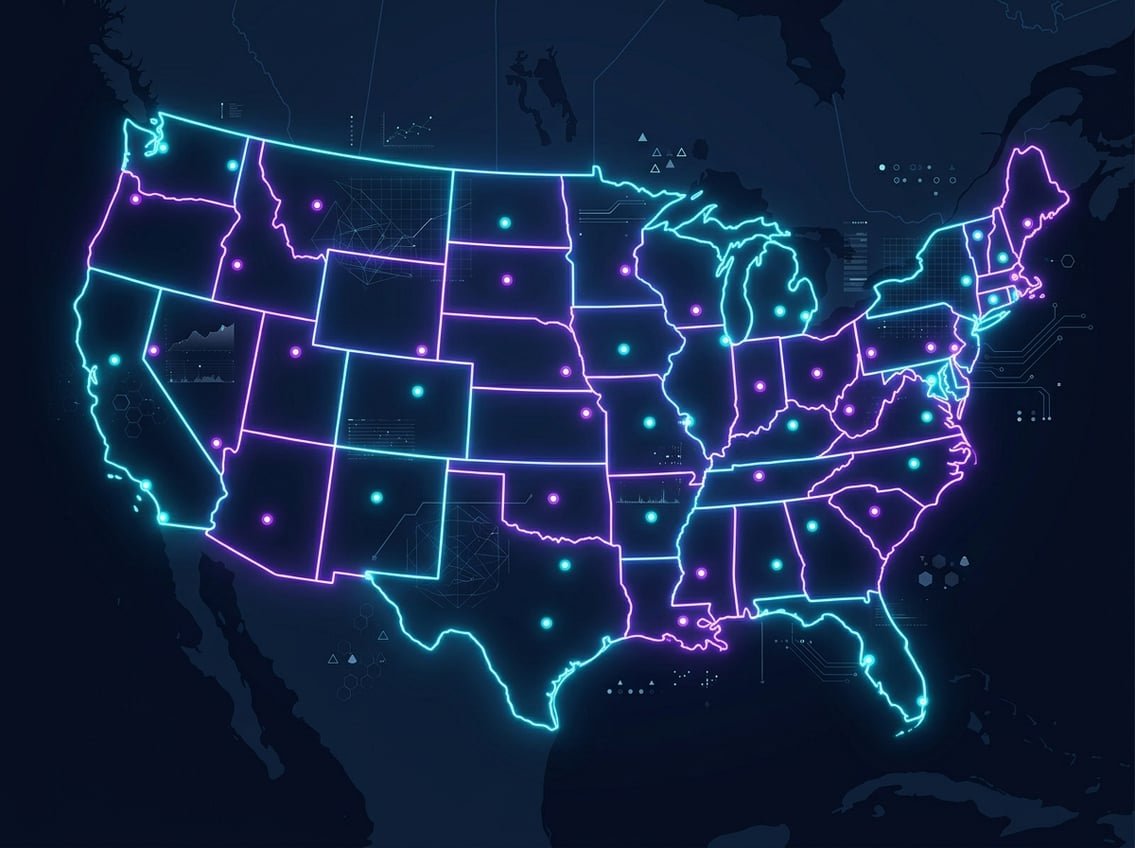
The USA is a peculiar case in the online casino market. There is no federal legal framework for real-money online casinos; the regulation happens state by state, and only a handful of states have legalized the product to date. This creates a bonus environment that is inconsistent, jurisdiction-dependent, and generally more conservative than what players in most European markets encounter.
What follows is the state-by-state landscape as of 2026, with attention to the specific bonus structures each regulator permits and what the aggregate data on realized outcomes looks like.
The Currently Legal States for Online Casinos
Real-money online casino play is legally permitted in a limited number of US states:
- New Jersey — the largest and most mature market, active since 2013
- Pennsylvania — active since 2019, second largest by revenue
- Michigan — active since 2021
- West Virginia — active since 2020, smaller market
- Connecticut — active since 2021, restricted to two operators
- Delaware — active since 2013, small market with limited operator selection
- Rhode Island — recently launched, limited operator options
Other states have legalized online sports betting but not casino play — this is a meaningful distinction as sports betting no-deposit offers (free bets) work differently from casino no-deposit bonuses. Nevada is a special case; despite the state's physical casino industry, online real-money casino play remains unavailable to residents.
How State Gaming Commissions Shape Bonus Terms
Each state's gaming commission sets rules that operators must follow, and these rules directly shape the promotional offers available. Common regulatory requirements across US regulated markets:
Bonus terms must be transparent and prominently displayed
Wagering requirements, cashout caps, and expiration windows must be clearly stated in promotional materials, not hidden in fine print. This has reduced but not eliminated aggressive marketing that oversells offers.
Maximum wagering multipliers are often capped by regulation. Some states cap allowable wagering requirements — for example, restrictions on multipliers above certain thresholds for headline offers.
Geolocation verification is mandatory. Every play session must confirm the player's physical location within the licensed state. This means US regulated no deposit bonuses can only be claimed by players physically present in eligible states at the time of registration and play.
Age verification is stricter
Most US regulated states require 21+ (versus 18+ in most other jurisdictions), and identity verification is enforced more rigorously.
Responsible gambling tools are mandatory. Deposit limits, session limits, self-exclusion, and cooling-off periods are required by state law and cannot be waived.
Typical Terms on US Regulated No Deposit Bonuses
Based on offers observed across US regulated markets:
- Bonus amounts: usually $10-$50, occasionally up to $100 at specific operators
- Wagering multipliers: 1x-20x (much lower than international norms due to regulatory pressure)
- Cashout caps: often uncapped or generously capped ($500+), reflecting the lower wagering requirements
- Game contribution: standard slot 100%, table game reductions in line with international norms
- Maximum bet during wagering: $5-$10 typical
- Expiration: 7-30 days depending on operator
- KYC required upfront before bonus credits — stricter than most international markets
The pattern that stands out: US regulated bonuses have much lower wagering multipliers than international equivalents. A $25 bonus at 1x wagering is genuinely player-favorable — you're essentially getting close to $25 in cash after minimal play-through. This is directly the result of state regulatory pressure, and it makes US regulated bonuses meaningfully better on expected value than their international headline-equivalent offers, despite typically smaller bonus amounts.
US vs International EV Comparison
NJ Casino: $25 bonus, 1x wagering, no cap → expected value ≈ $22-24
MGA Casino: $50 bonus, 40x wagering, $150 cap → expected value ≈ $12-15
Despite the smaller headline amount, US regulated bonuses often produce higher realized value because the low wagering multiplier dramatically improves clearance probability. This is one of the few cases where regulatory friction directly benefits players.
State-by-State Bonus Landscape
New Jersey. Largest US market, dozens of operators active. Bonuses are competitive because of operator density. Expect $25-$50 bonuses at low wagering (1x-15x) from established operators. Bonus code entry required at some operators, automatic credit at others.
Pennsylvania
Second-largest market. Terms similar to New Jersey. Some operator overlap; DraftKings, FanDuel, BetMGM, and Caesars all active in both states with similar bonus structures.
Michigan. Growing market with active promotional competition. Bonus terms comparable to NJ/PA. Some Michigan-only operators offer more aggressive launch-period promotions.
West Virginia. Smaller market with limited operator selection. Bonuses tend to be more conservative because competitive pressure is lower.
Connecticut. Only two operators (DraftKings Casino, FanDuel Casino) — market restricted by state law. Bonuses follow the parent operators' national templates with Connecticut-specific compliance.
Delaware and Rhode Island. Very limited operator selection, small player base. Bonuses exist but the selection is thin.
Sweepstakes Casinos: A Different Product Category
Outside the regulated states, US players increasingly encounter sweepstakes casinos — Chumba, LuckyLand, Pulsz, and similar. These operate under promotional gaming laws rather than casino gambling laws, and their "no deposit bonus" mechanics work differently.
Sweepstakes casinos use dual-currency systems: gold coins (play money, cannot be redeemed) and sweeps coins (promotional currency that can be redeemed for cash prizes). "No deposit bonuses" at these casinos typically credit sweeps coins directly to your account for signup, without requiring gold coin purchase.
The expected value analysis works differently because sweeps coins operate under specific redemption rules — minimum redemption amounts, verification requirements, and prize-based rather than gambling-based framing. For statistical purposes, sweeps coin no deposit bonuses typically produce realized values in the $5-$40 range per registration, comparable to modest regulated-state offers.
Sweepstakes casinos are available in most US states, including many where real-money online casinos are illegal. This makes them the practical option for US players outside the regulated states. The underlying mechanics of expected value, variance, and clearance still apply to their sweeps coin play.
Offshore Casinos and US Players
A gray zone exists in the market: offshore casinos (Curacao-licensed, primarily) that accept US registrations despite not being explicitly licensed in the US. These operators offer aggressive no deposit bonuses that would violate US regulatory constraints — 40x+ wagering, tight cashout caps, less generous overall.
The legal status is ambiguous but real. Players are not typically prosecuted for playing at offshore casinos, but the offshore operators have no US regulatory backstop. Withdrawal disputes have no US venue for escalation. The expected value calculation must include a substantial P(kyc payout) discount — probably 50-70% — to account for the elevated risk of nonpayment.
From an empirical standpoint, offshore no deposit bonuses at "reputable" offshore operators (those with years of operational history and clean payout records) can be viable. Offshore bonuses at newer operators or ones without clear reputation are essentially gambling on whether the withdrawal will process at all, regardless of the underlying bonus math.
Where the US Market Is Heading
The regulatory trend in the US is expansion — more states legalizing online casino play year over year. As additional states come online, operator competition increases within those states, and bonus terms tend to become more generous as market share pressure grows.
The state-level fragmentation makes the US bonus landscape different from any other major market. Unlike the UK, EU, or Australia where a single regulator sets terms across an entire market, US bonus terms vary state by state. A player who moves from New Jersey to Ohio (currently non-legal) loses access to the offers available in the departure state.
For players tracking bonus offers across US markets, the practical approach is to focus on the state(s) you physically operate in, subscribe to promotional emails from operators licensed in those states, and treat the market as narrower than any given operator's national marketing suggests.
The general framework of no deposit bonus evaluation applies to US regulated bonuses with two adjustments: the lower wagering multipliers significantly improve expected value, and the state-specific eligibility filters must be applied before comparing offers.
Payment Methods and Their Impact on Bonus Play
Payment methods at US regulated casinos differ meaningfully from international operators, and the specific payment options available affect both the initial signup process and the withdrawal experience after clearing wagering.
The dominant methods in US regulated markets: ACH bank transfer (the most common, slowest to process), online banking transfers via services like VIP Preferred and Trustly (faster, comparable to e-wallets), PayPal (widely supported, fast), and prepaid or branded gaming cards (Play+ cards specifically). Credit cards are supported at most operators but with restrictions varying by issuer — Chase, for example, blocks many gambling transactions.
For no deposit bonus withdrawals specifically, the withdrawal method choice matters for processing speed. ACH transfers typically take 3-5 business days to clear once approved. PayPal and Play+ withdrawals often process within 24 hours. Because US regulated casinos have mandatory KYC before any withdrawal, the total time from wagering clearance to received funds is generally 3-7 days depending on method chosen and documentation status.
Tribal Casino Considerations
The US market also includes tribal gaming operators — casinos operated by federally-recognized Native American tribes under specific gaming compacts with their respective states. Many tribal casinos have online extensions in states where the tribal-state compact permits it. Connecticut's two operators are both tribal-affiliated (Mohegan and Foxwoods).
Tribal operator no deposit bonuses generally follow state regulatory standards where applicable, but with some structural differences. Bonus terms can be more conservative because the operator's regulatory relationship is with the state gaming commission plus the tribe's own gaming authority. This double oversight tends to produce more cautious promotional structures.
The practical implication for players: tribal-affiliated operators are legitimate and well-regulated but their bonus offers may be less aggressive than competitor operators in the same state market. Compare specifically rather than assuming.
Frequently Asked Questions
Which US states have legal online casinos with no deposit bonuses?
New Jersey, Pennsylvania, Michigan, West Virginia, Connecticut, Delaware, and Rhode Island have legal online casino operations as of 2026. Each state has its own regulatory framework and operator selection. Other states have legal online sports betting but not casino play.
Are US regulated no deposit bonuses actually better than international ones?
On expected value, often yes. The lower wagering multipliers required by state regulations (typically 1x-15x versus international 30-45x) dramatically improve clearance probability. Smaller headline amounts, but higher realized value per attempt.
Can I use a VPN to access no deposit bonuses in states where I don't live?
No. US regulated casinos use active geolocation verification through GPS, IP triangulation, and cellular network data. VPNs are detected and rejected. Attempting to bypass geolocation typically results in account closure and forfeiture of any bonus winnings.
Are sweepstakes casinos legal in states without real-money online casinos?
In most cases yes — sweepstakes casinos operate under promotional gaming laws that predate modern gambling regulation. A few states (Washington, Idaho, Michigan for specific mechanics) restrict sweepstakes casinos. Check your state's specific status before registering.

Dr. Ethan Cross
Applied Statistics · Decision Theory
Ethan holds a PhD in applied statistics and writes about casino promotional offers from a formal methodological perspective, focusing on the specific structural properties of different market segments.